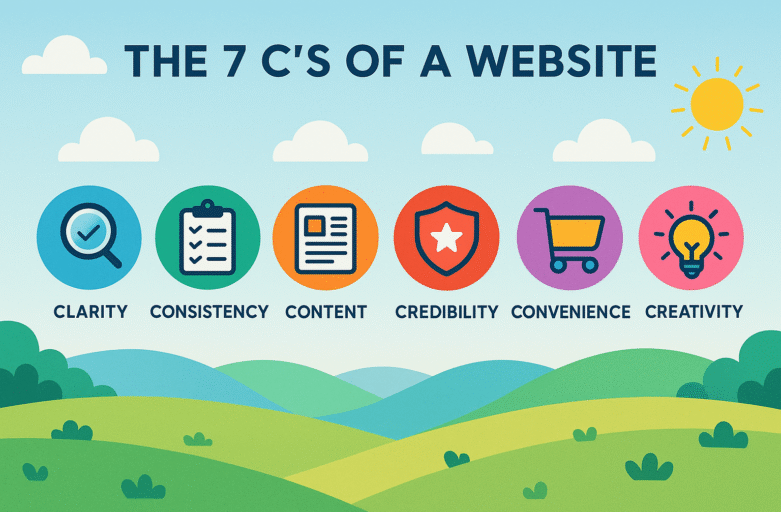

When you search for ways to make your website stand out, you’ll often come across the “7 C’s of a Website.” These seven pillars are the secret sauce behind every successful site, whether you’re building a personal blog, a business landing page, or an online shop. If you want your website to attract visitors, keep them engaged, and turn them into loyal fans or customers, you absolutely need to understand and apply these seven C’s.
Let’s dive in and discover exactly what the 7 C’s are, why they matter, and how you can use them to transform your website into a powerhouse of information, trust, and delight.
1. Clarity: Make Everything Crystal Clear
Clarity is the first and most important C because people want answers fast. When a visitor lands on your website, they should immediately know what your site is about, what you offer, and how to find what they need. If your website is confusing, cluttered, or filled with jargon, people will leave before you can say “bounce rate.”
How to achieve clarity:
- Use simple, direct language that anyone can understand.
- Make your main message stand out on every page.
- Organize your content with clear headings, bullet points, and short paragraphs.
- Avoid unnecessary pop-ups or distractions that hide your core message.
- Include a visible search bar and easy-to-use navigation.
You want visitors to feel like they’ve arrived at the right place, not a maze of mystery. The clearer your website, the more likely people are to stay, explore, and take action.
2. Consistency: Keep the Experience Uniform
Consistency is all about making sure your website looks and feels the same everywhere. This doesn’t mean every page should be identical, but your colors, fonts, tone of voice, and layout should be uniform. Consistency builds trust and makes your site easier to use.
Ways to ensure consistency:
- Stick to a color palette and use the same fonts throughout your site.
- Keep your logo in the same spot on every page.
- Use similar styles for buttons, links, and headings.
- Maintain a consistent tone of voice in your writing—whether it’s friendly, professional, or quirky.
- Make sure your navigation menu appears in the same place on all pages.
When your website is consistent, visitors feel comfortable. They know what to expect, and that makes them more likely to return.
3. Content: Deliver Value That Matters
Content is king, queen, and the entire royal court. Your website exists to provide information, answer questions, and solve problems. High-quality, relevant content keeps people coming back and encourages them to share your site with others.
Tips for great content:
- Focus on what your audience wants to know, not just what you want to say.
- Update your content regularly to keep it fresh and accurate.
- Use a mix of text, images, and videos to make your content engaging.
- Break up long blocks of text with subheadings and lists.
- Answer common questions and provide solutions to real problems.
If your content is helpful, easy to read, and tailored to your audience, your website will become a go-to resource.
4. Credibility: Build Trust With Every Click
Credibility is the foundation of any successful website. People need to trust you before they’ll buy from you, subscribe to your newsletter, or even read your blog posts. A credible website feels safe, professional, and reliable.
How to boost credibility:
- Display your contact information and make it easy to find.
- Include testimonials, reviews, or case studies from real people.
- Use professional-looking design and error-free writing.
- Show off any awards, certifications, or media mentions.
- Make sure your website loads securely (look for that little padlock in the browser).
When visitors trust your website, they’re more likely to engage, share, and convert.
5. Convenience: Make Everything Easy
Convenience is all about making your website simple to use. People are busy, and if your site is hard to navigate or slow to load, they’ll leave in a flash. You want your visitors to find what they need quickly and effortlessly.
Ways to maximize convenience:
- Use intuitive menus and clear calls-to-action.
- Optimize your website for mobile devices.
- Make forms short and easy to fill out.
- Ensure your pages load quickly—nobody likes to wait.
- Offer multiple ways for visitors to contact you or get help.
A convenient website turns casual visitors into happy users who keep coming back.
6. Connectivity: Link Up and Stay Social
Connectivity means making sure your website is connected to the wider world. This includes linking to your social media profiles, integrating with email marketing, and providing ways for visitors to share your content.
How to boost connectivity:
- Add social media buttons so visitors can follow you easily.
- Include sharing options on your blog posts and pages.
- Connect your website to your email newsletter or CRM.
- Link to relevant resources, partners, or industry leaders.
- Use contact forms, chatbots, or live chat to stay in touch.
A connected website helps you build a community, reach more people, and keep your audience engaged even after they leave your site.
7. Creativity: Stand Out With Style
Creativity is the final C, and it’s what makes your website memorable. You want your site to reflect your personality, brand, or mission in a way that’s unique and appealing. Creativity isn’t just about wild colors or fancy animations—it’s about finding a style that fits you and delights your visitors.
Tips for unleashing creativity:
- Use original images, graphics, or illustrations.
- Tell your story in a way that’s fun and engaging.
- Add interactive elements like quizzes, polls, or games.
- Experiment with layouts, but keep usability in mind.
- Let your personality shine through in your writing and design.
A creative website grabs attention, makes people smile, and keeps them coming back for more.
Bringing It All Together: The 7 C’s Checklist
Let’s recap the 7 C’s of a website in a handy checklist you can use to review your own site:
| C | What It Means | Quick Tip for Improvement |
|---|---|---|
| Clarity | Make everything easy to understand | Use clear language and simple navigation |
| Consistency | Keep the look and feel uniform | Stick to your brand style everywhere |
| Content | Provide valuable information | Answer your audience’s real questions |
| Credibility | Build trust with visitors | Show reviews and professional details |
| Convenience | Make your site easy to use | Optimize for speed and mobile devices |
| Connectivity | Link to social and external resources | Add social buttons and sharing options |
| Creativity | Stand out with unique style | Use original visuals and fun elements |
Why the 7 C’s Matter for Your Website
You might be wondering, “Do I really need all seven?” The answer is yes! Each C plays a crucial role in creating a website that people love to visit, trust, and recommend. If you focus on just one or two, you’ll miss out on the magic that happens when all seven work together.
A website with clarity is easy to use. Consistency makes it feel professional. Great content keeps visitors coming back. Credibility builds trust. Convenience makes life easier for everyone. Connectivity spreads your message far and wide. Creativity makes your site unforgettable.
When you master the 7 C’s, your website becomes more than just a digital brochure—it becomes a living, breathing hub for your ideas, products, or services.
How to Start Applying the 7 C’s Today
Ready to put the 7 C’s into action? Here’s a simple plan:
- Review your current website and note which C’s you’re already strong in.
- Identify areas where you can improve—maybe your content is great, but your site isn’t mobile-friendly.
- Make one small change for each C this week. For example, rewrite your homepage for clarity, or add a testimonial for credibility.
- Ask friends or colleagues to give honest feedback on your site’s clarity, consistency, and creativity.
- Keep refining and updating your website as your business or blog grows.
Remember, you don’t have to do everything at once. Even small changes can make a big difference over time.
Frequently Asked Questions About the 7 C’s
Are the 7 C’s only for business websites?
Nope! The 7 C’s work for any website—personal blogs, portfolios, online stores, nonprofit pages, and more.
Which C is the most important?
Clarity is usually the first priority, but all seven are essential for a truly great website.
How often should I review my website for the 7 C’s?
Check in every few months, or whenever you make big changes. The web evolves fast, so stay ahead!
Make Your Website Shine
You now know the 7 C’s of a website—clarity, consistency, content, credibility, convenience, connectivity, and creativity. By focusing on these core principles, you’ll create a website that’s easy to use, trustworthy, and fun to visit.
So go ahead—review your site, make some tweaks, and watch your online presence soar. Your visitors (and your future self) will thank you!